Can Veneers Replace Orthodontics? A Calabasas CA Perspective
A patient sits down, smiles carefully, and asks a version of the same question many cosmetic dentists hear every week: can veneers fix crooked teeth so I can skip braces or clear aligners?
It is a fair question, especially in a place like Calabasas, where people often want results that are polished, efficient, and camera-ready without committing to a year or two of orthodontic treatment. Veneers can create a dramatic transformation. They can change color, shape, proportion, and the visual alignment of front teeth with remarkable precision. In some cases, they do make orthodontics unnecessary. In other cases, they are the wrong tool for the job, or at least the wrong first step.
The short answer is this: veneers can sometimes camouflage mild crowding, spacing, or small alignment issues, but they do not literally move teeth or correct bite problems. Orthodontics moves teeth. Veneers reshape what is visible. That distinction matters more than most patients realize.
The best treatment plan depends on what is actually causing the smile concern, how much room exists in the arch, how the bite functions, how healthy the enamel is, and what trade-offs a patient is willing to accept. That is where judgment comes in. Cosmetic dentistry is not just about making teeth look straight in a photo. It is about balancing appearance, biology, and longevity.
What veneers can and cannot do
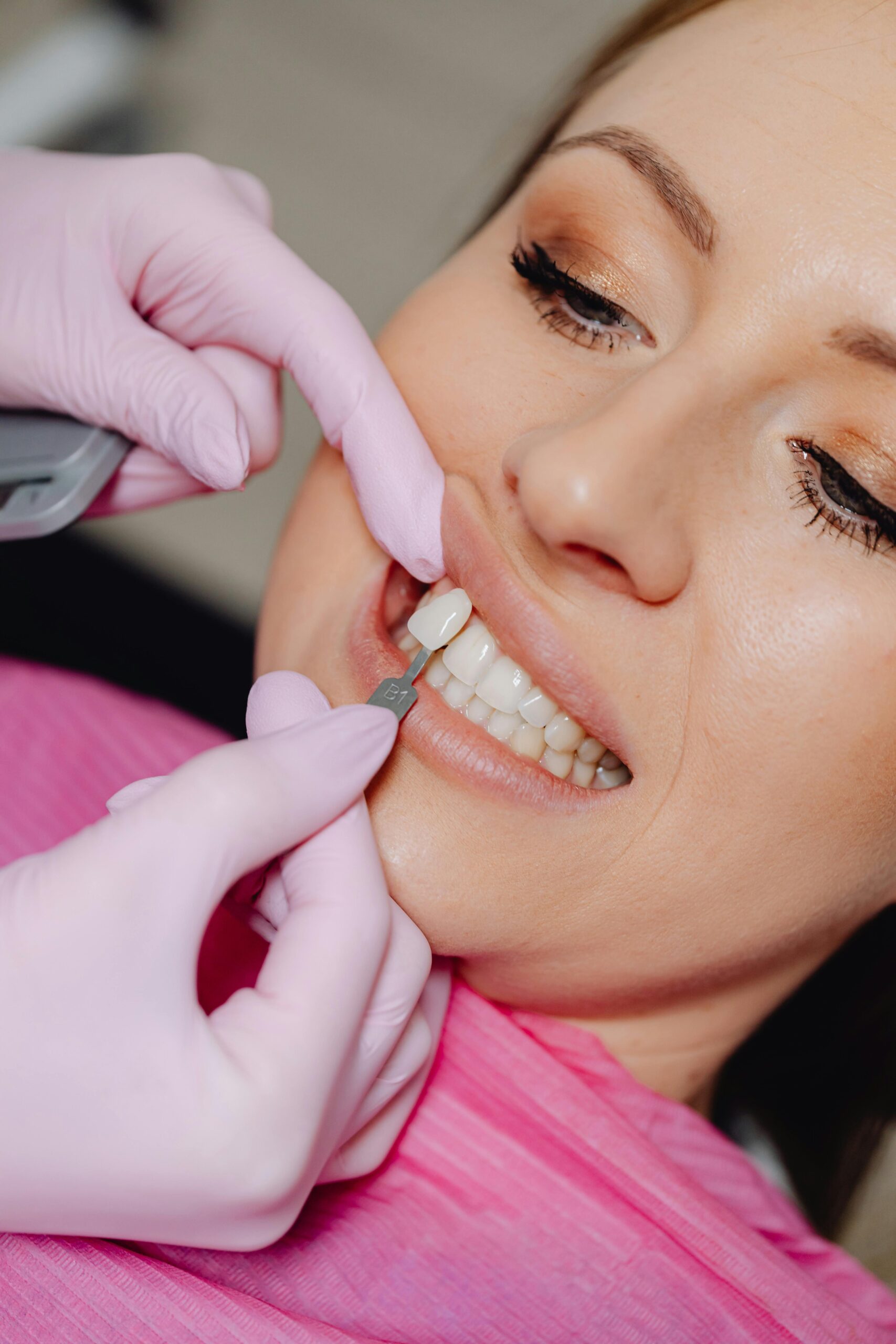
Veneers are thin restorations, usually porcelain, bonded to the front surface of teeth. They are exceptionally good at improving the appearance of teeth that are discolored, chipped, slightly misshapen, undersized, or unevenly spaced. They can also make a smile appear straighter by changing contours and proportions.
That last point is where the confusion begins. If one lateral incisor sits slightly behind the neighboring teeth, or a central incisor has a mild rotation, a skilled dentist may be able to design veneers that visually bring those teeth into harmony. From conversational distance, and often even in close-up photography, the smile can look beautifully aligned.
But veneers do not reposition roots, widen a narrow arch, correct a deep overbite, fix crossbite, or relieve significant crowding without sacrificing a great deal of natural tooth structure. If a tooth sticks far forward or sits far back, masking that discrepancy with porcelain may require aggressive reduction of healthy enamel. That can push a cosmetic case into territory that feels less conservative and less wise.
Patients sometimes assume a “smile makeover” can solve every esthetic problem because the before-and-after photos online look so convincing. What those photos do not always show is the bite, the side view, the amount of tooth preparation required, or the long-term maintenance behind the result.
The difference between visual straightness and true alignment
This is the key clinical issue. A smile can look straight from the front and still be misaligned functionally. Dentists and orthodontists are evaluating more than the line of the front teeth.
True orthodontic alignment considers the position of each tooth in bone, the way upper and lower teeth meet, the midline, the curve of the smile, the gum architecture, wear patterns, and the forces placed on the restorations during chewing and grinding. If those forces are unfavorable, veneers may chip, debond, or wear prematurely.
A common example is the patient with mildly crowded upper front teeth and a heavy overbite. On first glance, it seems like an easy veneer case. The catch is that the lower front teeth may strike the back edges of the future veneers with significant force. If the bite is not managed properly, those veneers can become expensive targets.
This is why a cosmetic plan that ignores orthodontic realities can look good on delivery day and become problematic later. Good dentistry is not just the reveal. It is how the work behaves in year five, year eight, and year twelve.
When veneers may be a reasonable alternative to orthodontics
There are cases where veneers are a practical, elegant option. Usually, these involve mild esthetic misalignment combined with other cosmetic issues that veneers would address anyway.
For example, imagine a patient in Calabasas with small spaces between the upper front teeth, one slightly rotated lateral incisor, and enamel that has darkened from old bonding or fluorosis. If the bite is stable and the spacing can be closed conservatively, veneers may solve several concerns at once. In that situation, orthodontics alone would straighten the teeth but would not improve color, shape, or the proportion of undersized teeth. Veneers might deliver the more complete result.
Another common scenario involves worn or chipped front teeth. A patient may have minor crowding, but the bigger issue is uneven incisal edges, old restorations, and an aged smile. Here, using veneers or a combination of veneers and bonding can make sense if the alignment discrepancy is modest. The restorative treatment is doing double duty, improving both esthetics and surface integrity.
In these cases, the phrase “replace orthodontics” is not quite accurate. A better way to think about it is that veneers can make orthodontics unnecessary when the alignment problem is small enough to be masked responsibly.
When orthodontics is almost always the better choice
There are situations where trying to use veneers instead of orthodontics leads to compromised dentistry. Significant crowding is high on that list. If the front teeth overlap substantially, especially when one tooth is pushed far inward or outward, a veneer-only approach often requires too much tooth reduction to create the illusion of alignment.
Pronounced rotations are another warning sign. A rotated tooth may look simple from the front, but from the side it often requires dramatic reshaping to create a veneer that appears straight. The same applies to teeth that are severely tipped or positioned outside the natural arch.
Bite issues also change the calculus. Anterior open bite, deep overbite, crossbite, and functional shifts are not cosmetic details. They affect how teeth contact one another and how restorations hold up. Veneers placed into an unstable bite can become a maintenance project rather than a durable improvement.
You also have to consider age. A younger patient with healthy enamel and a significant alignment issue is often better served by orthodontics because it preserves tooth structure. That is especially true if the patient’s teeth are otherwise attractive in color and shape. Preparing multiple healthy front teeth purely to avoid aligners is not always a great bargain when looked at over a lifetime.
The Calabasas factor: why local patient priorities shape the conversation
Patients seeking Veneers Calabasas CA often arrive with clear esthetic goals. Many work in industries where appearance matters, whether on camera, in client-facing roles, or simply in social environments where details are noticed. Time can be a real concern. So can privacy. Some adults do not want visible brackets. Others are open to clear aligners but dislike the idea of attachments, trays, and months of compliance.
That local context matters because treatment decisions are rarely made in a vacuum. A patient balancing professional visibility, a wedding date, travel, or a major life event may reasonably prefer a faster cosmetic option if the case allows it. But speed should not be confused with suitability.
In many upscale cosmetic practices, the most thoughtful answer is not a hard yes or no. It is often a staged plan. A patient might complete several months of clear aligner therapy to create a healthier, more conservative position for the teeth, then proceed with minimal-prep veneers or bonding. That approach can reduce the amount of enamel removal, improve symmetry, and produce a result that looks more natural because the restorations are not being asked to fake large positional changes.
Patients tend to appreciate this once they see the models, mockups, or digital simulations. The difference between “fastest possible” and “best balanced” becomes much easier to understand when they can visualize how much porcelain would be needed in one scenario versus the other.
The hidden cost of using veneers as a shortcut
Cosmetic dentistry has real staying power, but it is not maintenance-free. Veneers are durable, not permanent in the lifelong sense. They may last ten to fifteen years, sometimes longer with excellent planning, bite control, and home care. Still, they eventually need maintenance, repair, or replacement.
When veneers are used to camouflage alignment that should have been corrected orthodontically, they may be thicker, more stressed, and less conservative than they otherwise would have been. That can increase the biological and financial cost over time.
Here is where practical experience matters. A patient may say, “I do not want to spend eighteen months in aligners.” Fair enough. But if the alternative is preparing eight healthy front teeth, wearing temporaries, paying substantially more up front, and committing to future replacement cycles, the equation changes. Many people only compare the timeline at first. They do not compare the lifetime footprint.
This does not mean veneers are a poor investment. Far from it. In the right case, they are transformative and efficient. It simply means they should not be sold as a shortcut without a sober discussion of what is being traded away.
Cases where a combined approach works best
Some of the strongest cosmetic outcomes come from collaboration between orthodontic and restorative planning. A few months of tooth movement can make a veneer case dramatically more conservative.
Consider a patient with narrow black triangles near the gums, mild crowding, and uneven edge wear. Aligners can improve root positioning and spacing. Then a dentist can use conservative Veneers to refine shape, close residual spaces, and restore worn edges. The result often looks cleaner and more believable than either approach alone.
Another example is a patient whose teeth are fairly straight but whose gum levels and proportions are off. Minor orthodontic movement may improve the smile arc or create better symmetry before veneers are placed. Again, the goal is not to do more treatment for its own sake. The goal is to make the final restorative work smaller, stronger, and more natural.
This is often the sweet spot for adults who want a premium result. They are not opposed to cosmetic dentistry. They simply want it done intelligently.
Questions worth asking before choosing veneers over orthodontics
Before committing to treatment, patients should understand exactly what problem is being solved and by which method. These are the questions that tend to clarify the decision:
- Is my main issue color and shape, or is it true tooth position and bite?
- How much healthy enamel would need to be removed to make veneers look straight?
- Would short-term aligner treatment make the veneer work more conservative?
- How will my bite affect the longevity of the restorations?
- If I choose veneers now, what maintenance or replacement should I expect later?
A good consultation should answer all five clearly, without pressure and without glossy oversimplification.
What the examination should include
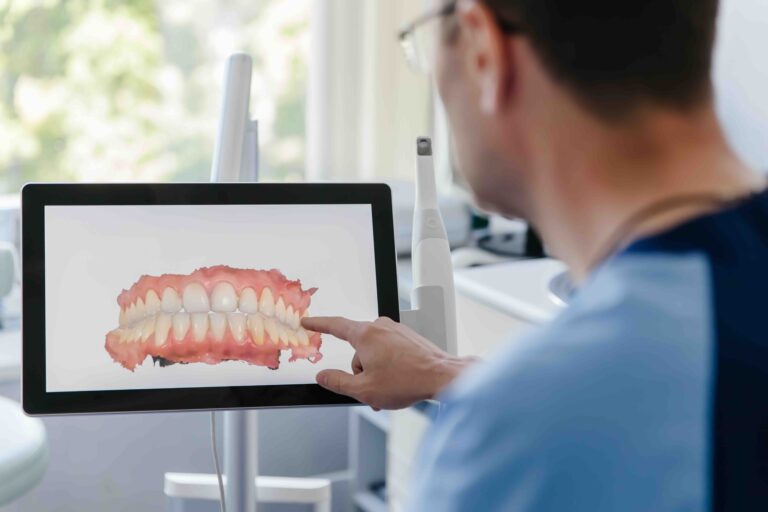
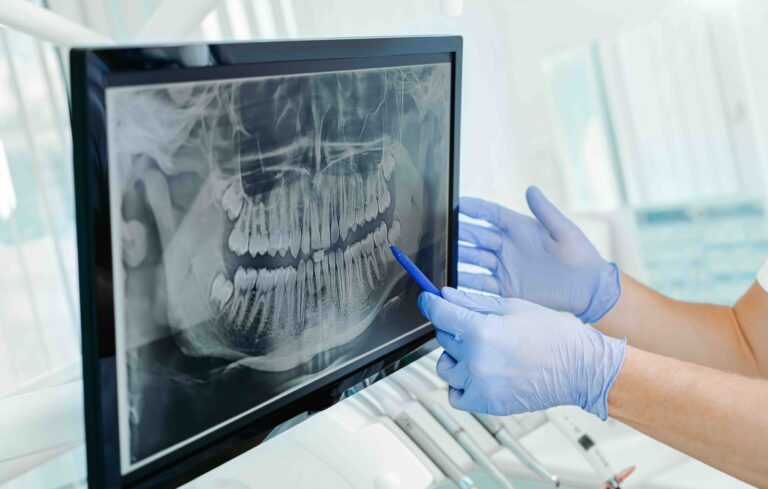
A veneer consultation that skips the functional exam is incomplete. Photos are useful, but they are only part of the story. For a case involving alignment concerns, the workup should include a bite assessment, a review of wear patterns, an evaluation of gum health, and often records such as scans or impressions. In some offices, digital smile design or a mockup helps patients understand what is possible and where the limits are.
If a patient has a history of clenching or grinding, that deserves special attention. Bruxism does not automatically rule out veneers, but it does influence material choice, design, and whether a night guard will be essential afterward.
The condition of the underlying teeth matters too. Existing fillings, previous bonding, cracks, or discoloration can all make veneers more attractive as a restorative option. By contrast, pristine enamel on a significantly crowded but otherwise healthy smile may point more strongly toward orthodontics.
This is why one-size-fits-all advice falls apart quickly. Two patients can look similar at a glance and require very different recommendations once the details emerge.
A realistic look at appearance
Many patients ask whether veneers look “fake.” The honest answer is that they can, if they are too opaque, too white, too bulky, or poorly matched to the face. Well-designed veneers do not announce themselves. They read as healthy, balanced, and believable.
Orthodontics has a different esthetic profile. It preserves the natural tooth and lets the patient keep the original surface characteristics, translucency, and anatomy. For some people, that is deeply appealing. They want straighter teeth, not a reinvented smile.
Others do want change beyond alignment. They are tired of tetracycline staining, years of edge chipping, peg laterals, or old composite repairs that never looked right. In those cases, veneers may offer a more satisfying finish than orthodontics alone ever could.
The real question is not which option is more “natural” in the abstract. It is which option fits the patient’s teeth, goals, and tolerance for intervention.
Timing, longevity, and lifestyle
Adults often make dental decisions around life timing. Someone planning a wedding in six months may lean toward veneers if the case is mild and the cosmetic concerns extend beyond alignment. Someone with a flexible timeline may prefer aligners first, then decide whether any restorative work is still needed.
Maintenance also deserves an honest conversation. Veneers need careful hygiene, regular exams, and sensible habits. Opening packages with your teeth, chewing ice, or ignoring nighttime grinding are bad ideas. Orthodontic relapse is another issue patients should know about. Straightening teeth does not guarantee they stay straight forever without retainers. So neither path is maintenance-free. They simply involve different kinds of maintenance.
From a budget standpoint, veneers usually require a larger immediate investment. Orthodontics may spread cost differently and preserve future restorative options. For many Calabasas patients, the decision is not purely financial, but cost still matters, especially when replacement over time is part of the equation.
What I would tell a patient sitting in the chair
If the teeth are mildly uneven, the bite is stable, and the patient also wants changes in color, shape, or size, veneers may absolutely be the right answer. If the teeth are healthy but meaningfully crowded or the bite is off, I would be cautious about using porcelain to disguise a problem that tooth movement could solve more conservatively.
If the patient wants the best long-term compromise, I would strongly consider limited orthodontics first and veneers second only where truly needed. That path does take longer. It often produces better dentistry.
There is also a middle group, people who do not need https://sethfjxt197.readspirex.com/posts/veneers-calabasas-ca-signs-you-may-be-a-good-candidate full veneers at all. Sometimes a few months of aligners followed by whitening and edge bonding creates a beautiful, restrained result. Cosmetic dentistry does not always need to be maximal to be successful.
That perspective matters in a market where dramatic transformations get the attention. Not every smile needs eight or ten veneers. Sometimes the smartest work is the work that preserves the most tooth.
The answer is less about the material and more about the diagnosis
Can veneers replace orthodontics? Sometimes, yes, but only when the alignment issue is modest and the restorative benefits of veneers justify their use. When the teeth need to move, veneers are not a true substitute. They are a cosmetic camouflage, and camouflage has limits.
For patients exploring Veneers Calabasas CA, the best outcome usually comes from a consultation that is equal parts cosmetic vision and clinical restraint. A dentist should be able to explain not just what can be done, but what should be done, and why. That distinction protects both the smile and the teeth underneath it.
The best cosmetic dentistry is not the fastest fix or the flashiest before-and-after. It is the treatment that respects function, preserves structure where possible, and still gives the patient the confidence they came in seeking. When veneers are chosen for the right reasons, they can be extraordinary. When they are used to avoid orthodontics at any cost, they can become an expensive compromise.
Oaks Dental
Address: 5000 Parkway Calabasas Ste 308, Calabasas, CA 91302
Phone number: +18184312000
FAQ About Veneers Calabasas CA
How much do veneers actually cost?
In the United States, dental veneers generally cost between $250 and $2,500 per tooth, while a full set typically runs anywhere from $6,000 to $25,000. Because the procedure is classified as cosmetic and elective, dental insurance almost never covers it.
How long do dental veneers last?
Dental veneers last a long time, but they are not permanent. They mainly depend on two key types: porcelain veneers and composite veneers. On average, porcelain types last 10 to 15 years, while composite types last 5 to 7 years before they need a fix or a new set.
What is the downside of having veneers?
The main downsides of dental veneers are that the process is permanent, they can cause tooth sensitivity, and they are costly to replace.